Hot flue gas leaving a boiler still carries recoverable sensible heat, but capturing it without causing leakage, corrosion, fouling or excessive fan load requires more than placing a heat-transfer surface in the exhaust path. You will be able to trace the gas and air routes, compare pre-heater designs, identify operating risks and judge whether a proposed unit fits your boiler.
Key takeaways
- Recover flue-gas heat before it leaves the stack.
- Choose recuperative or rotary designs based on leakage, space and maintenance.
- Check gas temperature, acid-dew-point corrosion, fouling and burner pressure drop.
- Compare an air pre-heater with an economizer using heat duty and operating limits.
How heat moves from the flue-gas outlet to the burner
Hot flue gas transfers sensible heat to cooler combustion air across a heat-transfer surface before the air reaches the burner. That is the air pre heater working principle: recover heat that would otherwise leave through the stack, while keeping enough pressure for the burner windbox.
1. From the furnace outlet, flue gas passes over the superheater, reheater and economizer, surrendering heat to steam and feedwater before reaching the air pre-heater inlet.
2. An isolation or bypass damper arrangement directs gas around the heat-transfer section during startup, shutdown, maintenance or abnormal temperature conditions. After the unit, the induced-draught fan pulls gas through the remaining ductwork toward the stack.
3. In parallel, the combustion-air fan pushes cooler air through the other side of the unit. The heated air then travels through the hot-air duct to the burner windbox or directly into the furnace.
4. Measure flue-gas and air temperature at each inlet and outlet, and install differential-pressure transmitters across both flow paths. A rising pressure drop at constant load indicates fouling or plugging; fan selection must cover the fouled condition, not only the clean rating.
The industrial air pre heater process changes with load. Lower firing rate reduces available flue-gas heat, while excess air increases gas mass flow and stack loss but dilutes the recoverable temperature rise. Record gas flow, air flow, temperatures, pressure drops and excess oxygen at comparable loads before claiming an efficiency improvement.
Higher air temperature also changes burner capacity, flame shape and NOx formation.
Recuperative tubes and plates versus a rotary regenerative matrix
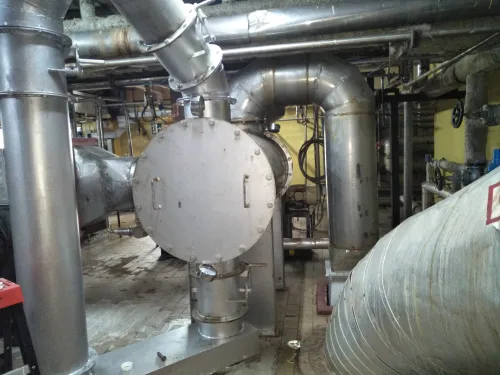
A fixed-wall recuperative pre-heater keeps flue gas and combustion air apart while heat crosses tubes or plates. A rotary regenerative pre-heater moves the heating surface instead: each metal-matrix sector absorbs heat in the flue-gas path, turns into the air path, and releases that heat.
In a rotary unit, a drive motor turns the rotor on bearings. Stationary sector plates divide the gas and air passages, while radial, circumferential and axial seals limit air-to-gas leakage.
Thermal expansion and rotor deformation require clearance; too much clearance raises induced-draft fan load, dilutes flue gas, increases downstream equipment volume and reduces delivered air temperature.
| Option | Physical design | Main trade-off |
|---|---|---|
| Tubular recuperative | Fixed tubes separate the streams | Low direct mixing, but greater surface area and footprint can make cleaning and tube replacement difficult |
| Plate recuperative | Stationary plates separate the streams | Compact heat transfer, but narrow passages can foul and expose more metal to corrosion |
| Rotary regenerative | Rotating baskets or matrix alternate between gas and air | High heat-transfer area in a compact body, but seals, bearings, drive and rotor alignment demand attention |
For air pre heater operation, compare gas and air pressure drop at clean and fouled conditions, not temperature alone. Recuperative units offer straightforward stream separation and inspection routes; rotary units can deliver compact heat recovery but make seal inspection, adjustment and rotor maintenance part of routine work.
Surface fouling also needs a planned cleaning route, because a blocked matrix or passage increases pressure drop on the affected side.
What temperature, corrosion and fouling do to air pre-heater operation
Hot flue gas enters at the highest temperature and gives up sensible heat across the air pre-heater, while combustion air enters cold and leaves hotter for the burner. The gas outlet and air inlet form the cold end, where flue-gas temperature, air temperature, cold-end metal temperature, flow and pressure drop determine reliable operation.
Do not protect the cold end against water dew point alone. Sulfur in coal or oil forms sulfur oxides, and water vapour can produce sulfuric acid; when metal falls below the fuel-specific sulfuric-acid dew-point range, acid condensation causes sticky deposits and low-temperature corrosion.
Low boiler load, high excess air and air leakage can lower or redistribute cold-end temperatures, so compare trends at the same load and oxygen level.
The hot end has a different failure limit. Excessive temperature can damage rotor or duct seals, degrade coatings, overheat bearings, distort ducts and push burner components beyond their rated temperature. Higher air temperature also changes burner capacity, flame shape and NOx formation.
On coal- or oil-fired boilers with SCR, ammonia slip reacts with sulfur oxides to form ammonium bisulfate. Its sticky deposits narrow passages, increase gas- and air-side pressure drop, reduce heat transfer and eventually plug the matrix or tubes.
Use steam or compressed-air sootblowing online for loose deposits. Reserve offline water washing for tenacious fouling, with drainage, drying and controls that stop wet ash from hardening or accelerating corrosion. Trigger cleaning when differential pressure rises at constant load, outlet temperatures drift or heat recovery falls—not solely by calendar interval.
How to size the unit and decide whether an economizer belongs beside it
Size the unit from a measured heat balance, not a catalogue outlet temperature. Use design, normal and minimum boiler loads.
1. Record flue-gas mass flow, combustion-air flow, gas and air inlet temperatures, fuel composition, sulfur content and ash loading.
2. Set the required gas and air outlet temperatures, required heat recovery, and allowable pressure drop on both sides. Include the boiler load range and excess-air condition.
3. Calculate fan duty at the fouled pressure drop, not the clean rating. Otherwise, the unit can reach its temperature target while leaving insufficient air pressure at the burner windbox. A rising differential pressure at constant load signals fouling or plugging.
4. Check the higher air temperature against burner capacity, flame shape, duct and seal limits, and NOx behaviour. Hotter air can improve ignition, but it can also increase NOx or upset combustion.
Choose the heat sink that delivers the greater operating benefit:
| Option | Heat transferred to | Prefer it when |
|---|---|---|
| Air pre-heater | Combustion air | The burner benefits from hotter air and the gas-side temperature remains above corrosion limits |
| Economizer | Boiler feedwater | Feedwater flow is high, stack temperature is adequate, or additional air heating would exceed burner limits |
An economizer and air pre-heater can operate in sequence. The economizer belongs upstream when its feedwater duty cools the gas without creating acid-dew-point corrosion; the air pre-heater then uses remaining sensible heat.
Feedwater recovery is more useful when combustion air is already hot enough, burner turndown is constrained, NOx rises with further air heating, or the boiler has substantial feedwater demand. The final choice follows heat balance, gas temperature and cold-end corrosion limits.
What a dependable air pre-heater installation in Pune must include
Pune changes the installation checklist, not the heat-transfer principle. To answer how industrial air pre heaters for work in pune, use the site design ambient temperature, monsoon humidity, outdoor dust, fuel composition, boiler load range and available electrical supply—not a generic catalogue rating.
1. Protect the intake with filtration sized for local dust, and specify an enclosure, weatherproof electrical panels, cable glands and shutdown preservation for humid monsoon conditions. Put drains at every low point so rainwater and condensate cannot collect in ducts or casings.
2. Allow for thermal expansion in tubes, casing, ducts and supports. Install isolation and bypass dampers where maintenance or cold starts require them, and provide platforms, doors and safe inspection points for seal checks, tube cleaning, and basket or tube replacement.
3. For a rotary unit, record rotor alignment, provide bearing lubrication access, adjust radial, circumferential and axial seals, and install independent protection for rotor stall and abnormal temperature. Seal clearances must accommodate thermal expansion without creating excessive air-to-gas leakage.
4. Commission the air pre heater installation in Pune at comparable boiler loads and excess-air conditions. Compare gas and air inlet and outlet temperatures, flow, gas-side and air-side pressure drop, leakage, fan margin and burner windbox pressure; trend cold-end metal temperature and rising differential pressure.
SGM Tech is useful here as an engineering integrator when its proposed heat balance, access provisions and controls match your boiler, rather than because a catalogue temperature looks attractive.
Related products
 | AIR PRE HEATER An AIR PRE-HEATER (APH) is any device designed to heat air before another process (for example, combustion in a boiler) with the primary objective of... View product → |
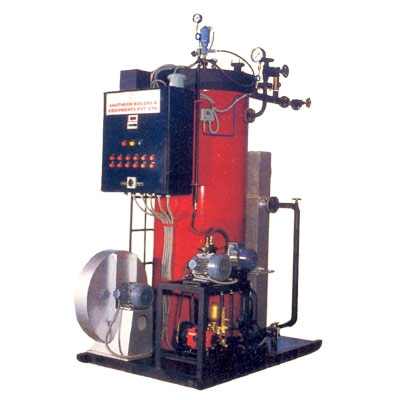 | THERMAL OIL HEATER A THERMIC FLUID HEATER is an industrial heating equipment, used where only heat transfers are desired instead of pressure. View product → |
Frequently asked questions
What is the air pre-heater working principle?
Hot flue gas transfers sensible heat through tubes, plates or a rotating matrix to cooler combustion air before the air reaches the burner.
How do recuperative and rotary regenerative air pre-heaters differ?
Recuperative units transfer heat across fixed tubes or plates, while rotary regenerative units store heat in a moving matrix and release it to the air stream.
What affects industrial air pre-heater operation?
Flue-gas temperature, acid-dew-point corrosion, soot or ash fouling, air leakage and pressure drop directly affect performance and reliability.
When should you install an economizer beside an air pre-heater?
Use an economizer when feedwater heating offers useful heat recovery and the boiler has sufficient flue-gas temperature after accounting for corrosion and pressure-drop limits.
Related products
 | Flue Gas to Air Heat Exchanger - HUL Ettah, Delhi HEAT EXHANGER is a device used to transfer heat between two or more fluids. There may be direct or indirect contact between the fluids. View product → |
 | SUPER HEATER A SUPER HEATER is a device used to convert saturated steam or wet steam into super-heated steam or dry steam. View product → |
 | HOT AIR A HOT AIR GENERATOR is a type of heater in which heat is generated by burning fuel and is transferred to the air at ambient temperature which is then... View product → |
 | WASTE HEAT RECOVERY A RECUPERATOR is a special purpose counter-flow energy recovery AIR HEAT EXCHANGER positioned within the supply and exhaust air streams of an air... View product → |