Measure fuel against steam and sugarcane processed before changing grate, fan or firing settings. By separating production-related demand from avoidable loss, you can identify whether the problem is wet fuel, poor combustion, heat escaping through the boiler, or steam being wasted after generation.
Key takeaways
- Compare fuel per tonne of cane and per tonne of steam, not fuel per day.
- Test fuel moisture and combustion air before changing boiler equipment.
- Inspect deposits, refractory damage, chimney heat and steam leaks.
- Run a controlled performance test before selecting repairs or heat recovery.
Measure fuel use against steam and cane, not tonnes per day
Tonnes of fuel per day cannot prove that jaggery boiler fuel consumption has worsened. Record fuel mass, fuel moisture, steam output, sugarcane processed and operating hours over the same test period, then compare equivalent production conditions.
Use these controls for each test:
- Weigh fuel with a timed weighment to expose a faulty feeder or an underestimated feed rate.
- Take a representative moisture sample from each fuel lot; hand-feel estimates are unreliable.
- Mark every fuel result as as-received or dry-basis. Bagasse at roughly 45–55% moisture uses combustion heat to evaporate water, and the vapour increases stack loss.
| Metric | Calculation | What it proves |
|---|---|---|
| Fuel per tonne of steam | Fuel kg ÷ steam tonnes | Boiler fuel demand for steam production |
| Fuel per kilogram of steam | Fuel kg ÷ steam kg | Fine-scale steam comparison |
| Fuel per tonne of sugarcane | Fuel kg ÷ cane tonnes | Fuel demand for cane throughput |
Compare periods with similar steam pressure, juice moisture, boiling time and production rate. Higher output, wetter juice or increased pressure can raise total fuel without showing boiler deterioration. Do not compare wet bagasse with dry biomass by mass alone; use the same moisture basis.
Record operating hours as well, because long hot standby or low-load running can increase daily fuel while hiding the true rate. This baseline gives you a meaningful measure of jaggery boiler fuel consumption.
Find wet fuel, poor combustion and uncontrolled air first
A wet fuel pile is an immediate suspect in boiler fuel loss in jaggery plants. Follow fuel from storage to ash: inspect roof leaks, drainage, condensate and long storage, then take moisture samples from several points in the delivered lot, not just the surface.
Fuel size and bed condition often explain the loss:
| Condition | What you will see | Likely consequence |
|---|---|---|
| Mixed-size or oversized fuel | Voids between pieces | Uneven air and incomplete burning |
| Excess fines | Restricted air passages | Smoke, carbon monoxide and carbon-rich ash |
| Deep or uneven bed | Dark zones and unburned pieces | Combustible carbon remains in ash |
| Thin bed | Burning fuel in ash pit or outlet | Fuel is discharged before burnout |
| Clinker | Fused, hard ash blocking grate openings | Unstable air distribution and firing |
Check grate loading, grate speed, spreader operation, under-grate pressure and ash-discharge timing together. Test ash for combustible carbon; changing one setting alone can hide the cause.
Trend stack oxygen, carbon monoxide, furnace draft and stack temperature together. Inspect forced-draft and induced-draft settings, dampers, secondary-air openings, furnace doors, inspection covers, expansion joints and duct connections. Air leaking after the furnace can make oxygen appear acceptable while increasing stack flow, heat loss and fan power.
Do not adjust air from flame colour alone. Use the installation manual’s test points, isolate hot surfaces, wear respiratory and heat protection, and follow lockout and flue-gas-testing procedures. Reduce air only to the lowest stable setting that controls carbon monoxide, smoke and ash carbon; starving the furnace increases incomplete combustion and clinker.
Check whether heat is leaving through deposits, refractory or the chimney
Heat is leaving after combustion when stack temperature rises at the same steam load compared with a clean or previously stable operating condition. The increase points to fouling, restricted gas flow or excessive air rather than higher production alone.
| Check | Physical sign | Likely heat loss |
|---|---|---|
| Stack and gas path | Soot or ash on water-tube, fire-tube, economizer or air-preheater surfaces; blocked passages; poor sootblowing | Heat leaves through the chimney instead of entering water or feedwater |
| Firing system | Higher temperature with unchanged load and badly adjusted firing | Heat-transfer balance has deteriorated |
| Refractory | Cracks, missing sections, damp patches, or unusually cool or hot areas | Heat escapes through the furnace shell, or wet lining consumes heat while drying |
| External surfaces | Hot furnace doors, casing, expansion joints, inspection openings, steam lines, valves or headers | Radiation loss through uninsulated surfaces |
Inspect access doors only under the site’s shutdown, isolation and hot-work procedure. Remove deposits safely, then repeat the temperature comparison; a clean gas path that still runs hot needs further investigation.
Test chimney draft with a calibrated draft gauge at the specified furnace and breeching points. Record readings at low, normal and high firing rates, and compare damper position with fan operation; excessive suction carries heat out, while inadequate draft causes smoke and incomplete combustion.
Use a smoke pencil or approved leak-detection method around doors, joints, panels, air-preheater seals and ductwork. Inward leakage under negative pressure can make oxygen appear acceptable while increasing gas flow, stack loss and fan power. These checks form the core of jaggery plant boiler troubleshooting.
Rule out steam-system losses and inefficient operating load
Yes. A sound boiler can still produce excessive jaggery boiler fuel consumption when steam escapes or condensate is not recovered. Leaking valves, failed steam traps, open bypasses, uninsulated headers and pan coils increase steam required for every boiling batch.
Perform a steam balance from the boiler outlet to the pans. Compare boiler steam flow with pan demand, trap discharge and visible leaks. Record:
- Feedwater temperature and condensate-return percentage; a cold make-up-water surge raises fuel demand and slows pressure recovery.
- Blowdown rate against conductivity or TDS control; excessive blowdown throws away hot boiler water, while insufficient blowdown promotes scale and carryover.
- Fuel per tonne of steam at each operating load.
Returning clean, hot condensate or using an economizer reduces furnace heat required for feedwater. Check heat-recovery design only after combustion and heat-transfer surfaces are clean; fouling, ash, low-temperature corrosion and excessive gas-side pressure drop can erase the saving.
| Load condition | What happens | Correct comparison |
|---|---|---|
| Full load | Wall, casing, fan and standby losses are divided by more steam | Establish the lowest fuel per tonne of steam |
| Normal load | Fuel reflects the usual jaggery process demand | Compare with the same pressure and production rate |
| Low load | Fixed losses consume a larger share of fuel; cycling pressure wastes heat | Match boiler capacity or sequence multiple units |
A boiler operating below design load can therefore appear inefficient without a defective furnace. Compare steam demand with capacity before blaming equipment.
Use a controlled test before choosing repairs or heat recovery
Do not specify repairs from a daily fuel figure. Run a controlled comparison at a stable steam load, with similar fuel and process conditions, before deciding that a jaggery plant boiler using too much fuel needs new equipment.
Record and independently verify:
- Fuel mass by timed weighment, fuel moisture and its calorific value
- Steam flow using a calibrated meter
- Feedwater temperature and blowdown rate
- Stack temperature, flue-gas oxygen and carbon monoxide
- Furnace draft and combustible carbon in ash
Calculate efficiency by both methods:
| Method | Calculation | What a disagreement indicates |
|---|---|---|
| Direct | Steam output ÷ fuel energy | Errors in steam flow, fuel mass, moisture or energy value |
| Indirect | 100% minus stack, moisture, radiation, incomplete-combustion and other measured losses | An unmeasured loss or faulty loss estimate |
A large difference between the two results usually exposes a bad flow, moisture or energy-value measurement. Correct wet storage, poor grate loading, excess air, draft leakage, furnace leaks and fouled heat-transfer surfaces before choosing an economizer or air preheater. This evidence prevents boiler fuel loss in jaggery plants from being mistaken for higher production.
Then check flue-gas dew point, ash-fouling behaviour, material selection, gas-side pressure drop, sootblowing, bypass control, fan capacity and guaranteed outlet temperatures. Undersized, fouled or corrosion-prone recovery equipment can increase fan power and maintenance. SGM Tech can use these measured site conditions to coordinate furnace, heat-transfer surfaces, controls and commissioning tests during a redesign.
Related products
 | JAGGERY MANUFACTURERS IN PUNE JAGGERY is a product derived from sugarcane juice by removing water content from it. View product → |
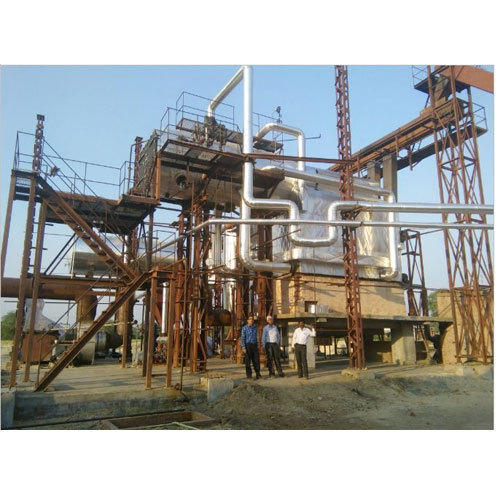 | BOILER Composite Type Boiler • Manufactured in the range of 1000 kg/hr to 15,000 kg/hr Capacities with different pressure ratings of 10.54 kg/sq.cm, 15... View product → |
Frequently asked questions
How should you measure jaggery boiler fuel consumption?
Record fuel mass, fuel moisture, steam output, sugarcane processed and operating hours during the same test period. Compare fuel per tonne of cane and per tonne of steam under equivalent conditions.
What should you check first when a jaggery plant boiler uses too much fuel?
Check wet fuel, inconsistent fuel size, incomplete combustion and uncontrolled air. These problems reduce useful heat before you investigate major equipment changes.
How does heat escape from a jaggery boiler?
Heat leaves through soot and ash deposits, damaged refractory, hot outer surfaces, excessive chimney temperature and uncontrolled flue-gas flow.
Can steam-system losses increase jaggery boiler fuel consumption?
Yes. Steam leaks, poor insulation, faulty traps, condensate loss and operation far below the boiler's efficient load increase fuel required for useful process heat.
Why run a controlled boiler test before choosing repairs?
A controlled test separates fuel quality, combustion, heat-transfer, steam-system and load problems. It prevents you from buying repairs or heat recovery equipment for the wrong loss.
Related product
 | Package Type Boiler PACKAGE BOILER is a COMPACT BOILER used for generation of steam in any type of industry. It can be Water tube or Fire Tube type. View product → |