A quoted heater package can include the furnace, circulation equipment, controls and safety devices while leaving the process coil, chimney, cabling or civil works to the buyer. By the end, you will be able to read a thermic-fluid quotation line by line, identify missing interfaces and compare packages by duty, fuel, controls and installation responsibility.
Key takeaways
- Request a component-by-component package list with clear supplier and site-work boundaries.
- Confirm fuel, burner, chimney, storage and electrical requirements before comparing quotations.
- Match expansion-tank size, fluid temperature limits and safety interlocks to the circuit design.
- Verify Pune site access, foundation, ventilation, piping routes and commissioning responsibilities before ordering.
The core equipment in a complete thermic-fluid circuit
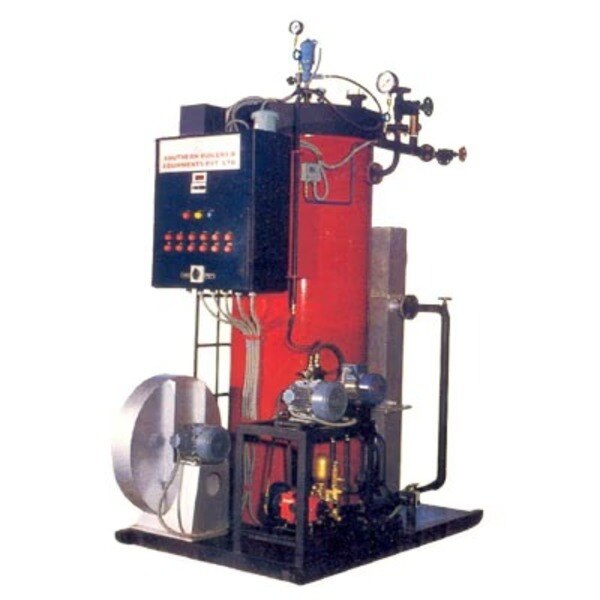
A buyer asking what is included in a thermic fluid heater system should expect the heater or furnace, thermal-fluid circulation pump, expansion tank, storage or drain tank, insulated hot and return piping, insulation, isolation valves, check valves, strainers, filters, pressure gauges, temperature sensors, a flow switch, pressure-protection devices, high-point vents, low-point drains, filling and sampling connections, control panel and safety interlocks.
The normal flow path is heater outlet → process user → return line → expansion-tank connection → circulation pump → heater inlet. Measure temperature at the heater outlet and return, prove flow near the pump or heater inlet, and install pressure gauges across the circuit.
Fired packages also need a burner or solid-fuel feeder, combustion-air fan, refractory, flue-gas duct and stack.
The thermic fluid heater system components usually divide as follows:
- Core package: heater, pump, expansion tank, drain tank, piping, valves, filtration, instruments and controls.
- Protective functions: low-flow trip, high-temperature cut-out, pressure protection, low-level protection, flame-failure protection, emergency stop and fuel or combustion-air fault trips.
- Process equipment: heat exchanger, jacketed vessel, calander, dryer or oven.
| Item | Package position | Check before ordering |
|---|---|---|
| Heater and circulation circuit | Basic system | Confirm duty and battery limits |
| Process heat user | Separate | Require explicit inclusion |
| Steam equipment | Separate | Oil-to-water or oil-to-steam exchanger must be listed |
A temperature controller alone is not safety protection; require independent high-temperature and low-flow interlocks.
Where the supplier’s package ends and site work begins
Do not approve a quotation until its battery limits appear on a drawing. The thermic fluid heater package details must identify whether the process heat exchanger or user coil is included, and where supplied hot-oil and return piping stops. Thermal oil heater installation costs rise sharply when these interfaces remain verbal.
For a fired heater, confirm that the package includes the fuel train, burner, combustion-air fan, refractory, flue-gas ducting, stack and combustion safeguards. An electric unit replaces those items with resistance elements, power-control equipment and a suitable incoming electrical supply.
Use this battery-limit procedure before placing the order:
1. Mark the heater outlet, user inlet, user return, expansion connection and pump suction on the process-flow diagram. Label every valve, support and pipe section beyond those points as supplier or buyer scope.
2. Obtain written responsibility for anchors, guides, pipe supports, foundations, chimney and duct supports, fuel storage, fuel connection, electrical cabling, incoming power, water-cooling provisions, external insulation, lifting access and civil works.
3. Assign commissioning tasks: supply of commissioning fluid, flushing, leak testing, filling, venting, fire protection, statutory inspection work and local approvals. Pune does not define these boundaries; the purchase specification and site interface schedule do.
4. Check the quotation for access platforms, electrical classification, fuel-pressure regulation, burner management and independent low-flow, high-temperature, flame-failure and emergency-shutdown safeguards.
Treat the process user, steam system and building works as separate packages unless listed explicitly. A thermic-fluid circuit produces steam only through a separately specified oil-to-water or oil-to-steam exchanger and steam-side equipment.
What the fuel choice changes in the package and quotation
A 1,000 kW heater does not deliver 1,000 kW to your process. Useful duty must include process load, line and equipment losses, heat-up duty, fluid heat capacity, flow and required temperature difference; inadequate circulation can overheat oil locally while outlet temperature looks normal.
Fuel changes the thermic fluid heater package details and its quotation:
| Fuel | Package additions | Main impacts |
|---|---|---|
| Natural gas, LPG or diesel | Fuel train, pressure regulation, burner management, combustion-air fan, refractory, flue-gas duct and chimney | Fuel consumption, electrical load and statutory safeguards |
| Biomass or wood | Grate or screw feeder, furnace, larger refractory, ash handling and flue-gas cleaning | Fuel preparation, operator labour, ash disposal and larger stack |
| Coal | Grate or stoker, coal-feeding equipment, ash removal, refractory and flue-gas cleaning | Storage, dust control, chimney size and maintenance |
| Electric resistance | Resistance elements, power-control equipment, sensors and electrical protections | No burner, fuel train, combustion air, ash or chimney, but high connected electrical load |
Demand these thermic fluid heater system components and figures in writing:
- Duty in kcal/hour or kW; design and operating temperature; thermal-fluid inventory
- Circulation flow rate, pump head, heater pressure drop and user pressure drop
- Fuel consumption, connected electrical load, stack diameter and height
- Startup or warm-up assumptions, including initial fluid temperature and heat-up time
Heater duty is not steam duty. Steam equipment remains outside scope unless an oil-to-water or oil-to-steam exchanger, feedwater system, separator and steam-side controls are separately included.
How expansion, fluid temperature and safety controls fit together
The expansion tank must hold the thermal expansion of the entire fluid inventory, not just the heater volume. Connect it at a suitable high point, and arrange the circuit so vapour or gas cannot reach the circulating-pump suction.
Open atmospheric and nitrogen-blanketed tanks are not interchangeable:
| Option | What it means | When it applies |
|---|---|---|
| Open atmospheric tank | Fluid is exposed to atmospheric pressure through the tank arrangement | Fluid properties, operating temperature and circuit design permit atmospheric service |
| Nitrogen-blanketed or pressurised tank | An inert gas blanket limits air contact and maintains controlled pressure | The approved fluid or operating temperature makes oxidation control and pressure management necessary |
Bulk temperature is not film temperature. The fluid can remain below its maximum bulk limit while a locally overheated heater surface exceeds its film limit, causing oxidation, sludge or low-boiling fractions. Use the approved fluid datasheet for both limits; never infer them from the heater nameplate.
Select the pump using hot- and cold-fluid viscosity, density, vapour pressure, seal temperature, NPSH and circuit pressure drop, not water properties.
Specify these independent protections in the thermic fluid heater system components schedule:
- High-temperature cut-out and low-flow trip
- Low-level alarm and expansion-tank pressure or level protection
- Flame-failure, combustion-air and fuel-train fault trips
- Pump interlock, emergency stop and furnace-pressure control
A temperature controller alone cannot replace independent high-temperature and low-flow protection.
The installation details to confirm before ordering in Pune
A site-ready thermal-oil heater installation needs more than a heater, burner and pump. Confirm the physical interfaces and responsibilities before ordering a thermic fluid heater in Pune; the city does not define who supplies missing site work.
1. Check the installation design for anchors, guides and expansion loops along every hot-oil line. Use expansion joints only where the movement calculation justifies them, and specify flexible connections at heater, pump and process-equipment interfaces. Rigidly restrained piping can load heater nozzles and pump casings.
Select insulation for the operating temperature, protect it from oil ingress, and keep flanges, seals, drains and leak-detection points accessible. Separate oil-filled equipment and saturated insulation from burners, hot surfaces and other ignition sources.
2. Put each site responsibility in an interface schedule: foundations; chimney and duct supports; fuel storage and connection; electrical power and cabling; water-cooling provisions; insulation; lifting and access; commissioning fluid; flushing; fire protection; and local approvals. For fired systems, include the fuel train, combustion-air path, flue duct, stack, access platforms and statutory inspection work.
3. Require filling, flushing, sampling and replacement connections, plus high-point vents, low-point drains, strainers or filters and a drain or storage tank. Ask SGM Tech for a marked battery-limit drawing, equipment schedule, utility table, control philosophy, foundation loads, stack data and named commissioning responsibility.
4. Do not accept a quotation listing only heater capacity and burner rating. Record who supplies installation materials, testing, leak checks, fluid charging and every connection needed to start safely.
Related product
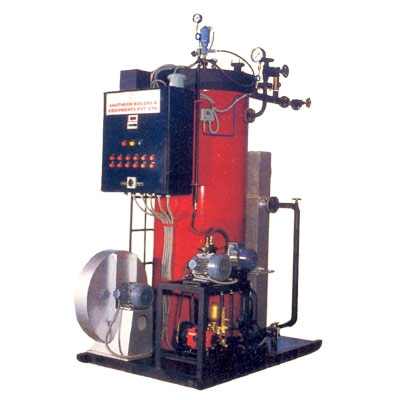 | THERMAL OIL HEATER A THERMIC FLUID HEATER is an industrial heating equipment, used where only heat transfers are desired instead of pressure. View product → |
Frequently asked questions
What equipment is included in a complete thermic-fluid heater circuit?
A complete circuit includes the heater or furnace, circulation pump, expansion tank, storage or drain tank, insulated hot and return piping, valves, strainers, filters, gauges, temperature sensors, flow protection, pressure protection, vents, drains, filling connections, sampling points, controls and safety interlocks.
Where does a thermic fluid heater supplier’s package end?
Confirm whether the quotation includes foundations, fuel supply, chimney work, electrical cabling, plant piping, insulation, ventilation, lifting, statutory approvals, fluid filling, testing and commissioning. The supplier should identify each item as included, excluded or provided by the customer.
How does fuel choice change a thermic fluid heater quotation?
Fuel choice changes the burner, fuel train, storage and handling equipment, chimney and emissions controls. Ask whether the price includes the selected burner, pumps, tanks, filters, regulators, controls and fuel-line installation.
How do expansion, fluid temperature and safety controls work together?
The expansion tank accommodates fluid volume changes, while temperature controls limit operating and outlet temperatures. Flow switches, high-temperature trips, low-level protection, pressure relief devices and burner interlocks stop unsafe operation when circulation or pressure conditions fall outside the design range.
What installation details should you confirm before ordering in Pune?
Confirm the foundation, equipment-room dimensions, access for delivery and maintenance, ventilation, chimney route, fuel availability, electrical supply, piping route, insulation, drainage, local approvals and who will perform testing and commissioning at the Pune site.