The answer depends less on Pune’s location than on your measured stack temperature, fuel, operating hours, airflow and available fan pressure. You will be able to screen the opportunity, identify corrosion and combustion risks, compare alternatives, and request a quote that supports a defensible payback calculation.
Key takeaways
- Confirm exhaust temperature, operating hours and combustion-air demand before sizing.
- Specify fuel, ash, sulphur, moisture and dew point to control corrosion and fouling.
- Compare air preheating with economisers, recuperators and other heat-recovery options.
- Require duty, materials, pressure drop, access and payback assumptions in every quote.
Does your exhaust contain enough usable heat?
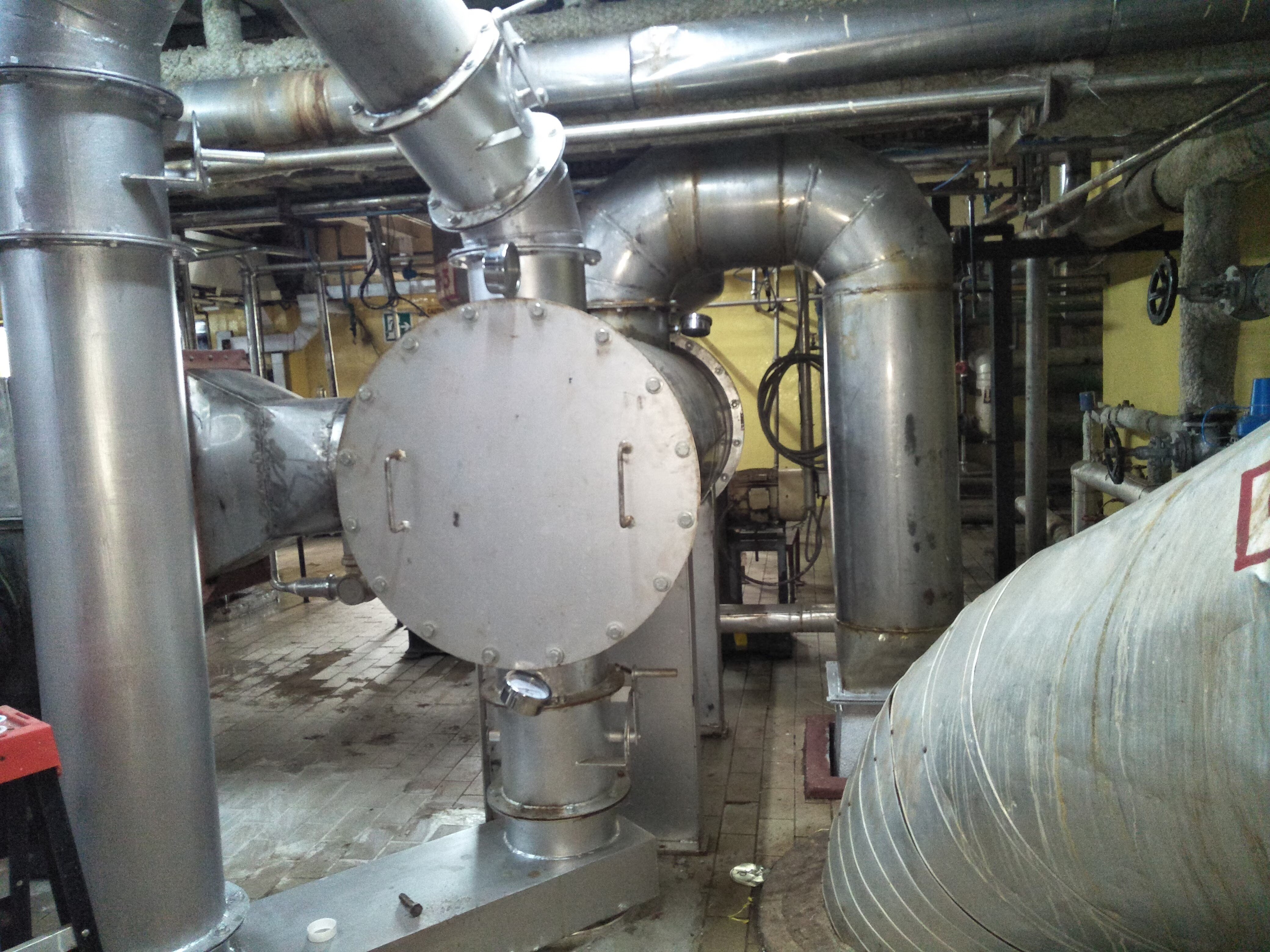
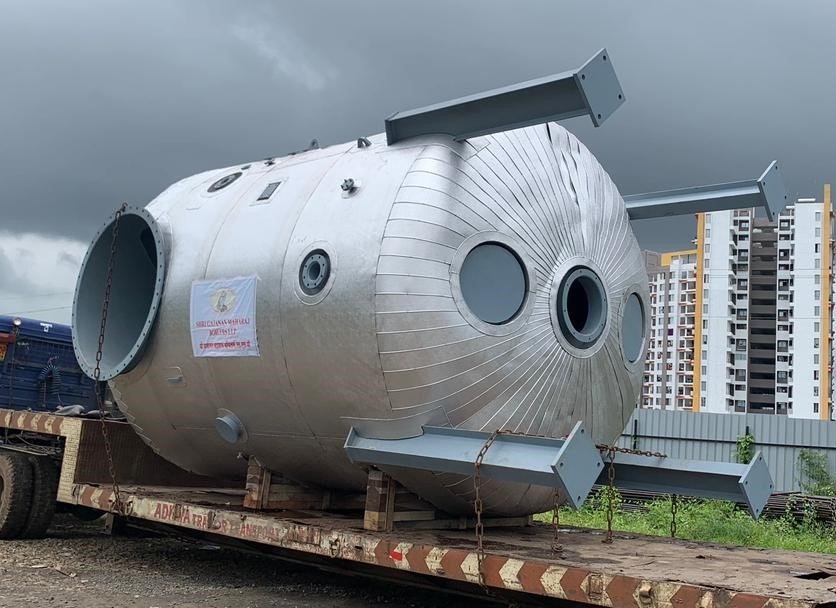
Enough usable heat exists only when hot exhaust is available for enough hours and a real heat load can accept it. In a flue gas heat recovery exchanger, hot flue gas passes through one side while clean combustion air flows through the other.
A metal wall transfers heat between the streams and prevents flue gas from contaminating the burner air.
Make the first financial screen from measured operating data:
- Flue-gas mass flow and temperature at the exchanger inlet
- Target flue-gas outlet temperature
- Combustion-air flow, inlet temperature and target outlet temperature
- Annual operating hours and firing rate
- Fuel consumption and allowable pressure drop
The recoverable duty is approximately Q = flue-gas mass flow × specific heat × (inlet temperature − outlet temperature). Compare that heat with the energy needed to raise the combustion air to its target temperature, then value only the fuel displaced during actual operation.
A high fuel bill does not prove a worthwhile project. Intermittent firing, a low stack temperature, air leakage around the exchanger or a small useful heat load can destroy the return.
Preheated air also does not produce an equal percentage reduction in fuel use: boiler efficiency, excess air, firing rate and fan power determine how much fuel the recovered heat actually displaces.
Can the exchanger handle Pune flue gas without corrosion or fouling?
It can, but only if the cold-end temperature matches the fuel chemistry. A flue gas air heat exchanger in Pune should be designed from measured gas composition and fuel certificates, not a generic minimum stack-temperature rule. Sulphur, chlorine, moisture and unburned compounds determine water and acid dew points; cooling below them creates corrosive condensate.
Specify these items before selecting materials:
- Carbon steel suits dry, non-condensing gas service; stainless steel or corrosion-resistant alloys suit contaminated gas, wet sections and condensate contact.
- Insulate cold casing and ducts, allow for thermal expansion, and install expansion joints so cycling does not crack welds or distort tubes.
- Provide cold-end temperature control, a bypass damper and instrumentation for outlet temperature, oxygen and pressure drop.
- State fouling resistance, cleaning method, inspection doors, tube or plate access and guarantees at fouled—not only clean—conditions.
| Recovery mode | Required protection | Main risk |
|---|---|---|
| Non-condensing sensible recovery | Keep metal above the applicable dew point; drain no condensate | Acid corrosion if the cold end cools during low load |
| Condensing recovery | Sloped drains, traps, corrosion-resistant wetted parts, neutralisation and legal disposal | Acidic effluent flooding or attacking the exchanger |
Coal and biomass bring ash, unburned carbon, sticky deposits and erosion; oil can add sulphur and soot. High velocity erodes surfaces, while low velocity deposits ash. A proposed design fails scrutiny if it lacks cleaning access, inspection openings, bypass operation and a documented fuel-specific gas analysis.
Is air preheating better than the available alternatives?
An economizer can extract more useful heat into boiler feedwater because water carries more heat per unit flow than air. Air preheating is easier to retrofit when no water-side connection exists, but it raises flame temperature and can increase NOx.
| Option | Main value | Main trade-off |
|---|---|---|
| Boiler-feedwater economizer | Transfers heat into water efficiently | Needs water piping, controls, footprint and condensate protection |
| Air heater or recuperator | Simple heat recovery to combustion air | Adds pressure drop; air temperature, leakage, fouling and burner limits matter |
| Rotary heat exchanger | Compact, high heat transfer | Rotating seals can leak flue gas into air; fouling and maintenance increase |
| Gas-to-gas recuperative burner | Integrates recovery at the burner | Limited burner compatibility, turndown and flame-temperature range |
| Direct flue-gas recirculation | Controls flame temperature and NOx | Requires ducting, fan capacity and precise control; it does not recover heat into a useful load |
| Burner or boiler tuning | Removes excess-air and combustion losses first | Delivers no recovery if the burner is already correctly tuned |
Check the burner supplier’s maximum combustion-air temperature, low-fire stability, startup and trip sequence, exchanger bypass and NOx limits. Include fan curves, motor power and available pressure margin; a cheap industrial heat exchanger price becomes irrelevant after a fan upgrade. Condensing designs also need acid-resistant drains, traps and neutralisation.
What should a Pune quote include before you compare prices?
Compare quotes only after each bidder completes the same duty-and-constraints schedule. It must state fuel composition, flue-gas flow and temperature range, combustion-air flow, inlet and target outlet temperatures, design pressure and temperature, material grade, corrosion allowance, fouling condition, cleaning method and maximum pressure drop. Surface area alone proves little.
Ask each bidder to identify:
- Recovered kilowatts, exchanger surface area, clean and fouled pressure drops, fan curves and motor power.
- Access doors, dampers, bypass arrangement, insulation, instrumentation, supports and commissioning scope.
- Thermal and pressure-drop guarantees, material records, expansion calculations, welding records and the performance-test method.
Compare the commercial scope, not just the nameplate:
| Scope | Included cost items | Common exclusion |
|---|---|---|
| Equipment-only | Exchanger fabrication and listed instruments | Ducting, fans, supports, installation and taxes |
| Supply plus installation | Exchanger, ducting, insulation, fans, controls, lifting and commissioning | Civil work, refractory changes or shutdown losses |
| Turnkey retrofit | Complete installed system, civil work, electrical work and shutdown coordination | Confirm freight, GST, spares and future cleaning |
SGM Tech can be asked to document thermal and pressure-drop guarantees, material records, expansion calculations and the complete installed scope as an engineering integrator.
There is no credible flue gas to air heat exchanger cost in Pune or generic air heat exchanger supplier price without site measurements and a dated quotation scope. Request separate prices for fabrication, ducting, refractory or insulation, fans, electrical controls, civil work, transport, lifting, installation, shutdown time, GST and every exclusion.
Related products
 | Flue Gas to Air Heat Exchanger - HUL Ettah, Delhi HEAT EXHANGER is a device used to transfer heat between two or more fluids. There may be direct or indirect contact between the fluids. View product → |
 | AIR PRE HEATER An AIR PRE-HEATER (APH) is any device designed to heat air before another process (for example, combustion in a boiler) with the primary objective of... View product → |
How do you prove the payback before committing capital?
Prove the project with measured operating data, not a catalogue efficiency figure. Log stack temperature before and after recovery, oxygen or excess-air readings, fuel flow, combustion-air flow, steam or process output, firing rate, fan current and operating hours at minimum, average and maximum loads.
1. Calculate recovered duty at each load, then convert it into avoided fuel cost. Value fan electricity separately, including any fan upgrade, and subtract cleaning, maintenance, downtime and condensate-handling costs.
2. Use annual operating hours and the actual load distribution to produce a simple payback. A continuously fired boiler or process heater with a hot, steady stack is a stronger candidate than an intermittent plant that spends much of its time cold or at low fire.
3. Make commissioning acceptance tests part of the purchase: record clean and fouled pressure drop, outlet temperatures, burner stability, bypass-damper operation and condensate drainage. Confirm that the fan retains adequate margin at fouled conditions and that the exchanger does not upset flame control.
4. Check the installation against the Maharashtra Pollution Control Board consent, monitoring obligations and emission limits. Compare particulate, NOx, SOx and visible emissions before and after commissioning; a lower stack temperature does not prove compliance.
The equipment is worth pursuing only when measured duty, annual utilisation, suitable materials, fan margin and complete installed cost support the payback. If the result works only at maximum load, or excludes ducting, controls, shutdown time or maintenance, reject the investment until the model includes them.
Frequently asked questions
Does your exhaust contain enough usable heat for air preheating?
Check exhaust temperature, operating hours, flow rate and the combustion-air heat load. Recovery is useful when hot gas is available consistently and the furnace can accept preheated air.
Can a flue gas to air heat exchanger handle Pune flue gas?
Specify the fuel, ash, sulphur, moisture and acid-dew-point conditions. Select materials, gas velocity, access doors and cleaning provisions to limit corrosion and fouling.
Is air preheating better than other heat-recovery options?
Compare air preheating with economisers, recuperators and process-air heating using delivered heat, pressure drop, controls, maintenance and installation constraints.
What should a Pune flue gas heat exchanger quote include?
Ask for thermal duty, inlet and outlet temperatures, gas and air flow rates, pressure drop, materials, dimensions, cleaning access, controls, installation scope and exclusions.
How do you prove the payback before committing capital?
Use measured fuel consumption, exhaust conditions, operating hours, expected heat recovery and fuel cost. Include fans, ducting, controls, downtime, cleaning and maintenance in the capital calculation.
Related products
 | WASTE HEAT RECOVERY A RECUPERATOR is a special purpose counter-flow energy recovery AIR HEAT EXCHANGER positioned within the supply and exhaust air streams of an air... View product → |
 | WASTE HEAT RECOVERY SYSTEM WASTE HEAT RECOVERY is a process of recovering ENERGY from waste process outputs. View product → |
 | SUPER HEATER A SUPER HEATER is a device used to convert saturated steam or wet steam into super-heated steam or dry steam. View product → |