A boiler supplies controlled heat for the stages where sugarcane juice must be clarified, concentrated and brought to its final texture; it does not make jaggery by itself. By the end, you will be able to trace the steam path, distinguish steam heating from direct-fired and thermic-fluid systems, estimate steam demand and identify the equipment and compliance checks that affect a purchase.
Key takeaways
- Use indirect steam heating to keep combustion gases away from jaggery juice.
- Match boiler capacity to juice flow, evaporation duty, and final jaggery form.
- Return clean condensate to reduce fuel use and maintain stable steam production.
- Check fuel, water treatment, controls, access, and local installation conditions before purchase.
Where the Boiler Fits in the Jaggery Production Line
A boiler does not make jaggery directly; it supplies controlled heat after sugarcane juice extraction. The answer to how does a boiler support jaggery plant for production is indirect heating: steam transfers heat through coils, calandrias or steam-jacketed pans, keeping combustion gases away from the juice and reducing scorching risk.
| Operation | Heat source or use | Boiler contribution |
|---|---|---|
| Juice extraction | Cane crusher or mill; mainly mechanical energy | No direct steam duty, except hot water for washing or dilution |
| Clarification | Heated juice, settling and removal of scum | Steam can maintain controlled temperature in a jacketed vessel |
| Concentration | Open pan, steam pan or multiple-effect evaporator | Main boiler duty: steady heat removes water and raises soluble solids |
| Moulding | Hot moulds, trays or drying air | Steam can provide hot water or indirect drying heat |
| Powder jaggery | Granulation followed by drying and cooling | Steam may heat drying air, while the product itself needs controlled moisture removal |
The boiler becomes valuable when the plant needs several pans, continuous evaporation, repeatable temperature control or less smoke around operators. A small unit using one open pan may prefer direct firing, while another may use hot water or thermic fluid instead of steam.
Include juice heating, clarification, pan warm-up, startup and simultaneous pan operation in the steam balance; average evaporation alone can leave the plant short during charging or high-moisture bagasse firing. Return clean condensate to the feedwater system to cut fuel and make-up-water demand, but isolate the return if juice or cleaning chemicals could contaminate it.
Jaggery Plant Boiler Working: From Fuel Combustion to Condensate Return
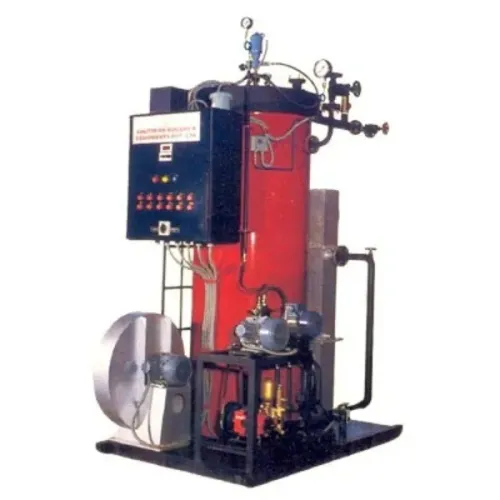
Fuel becomes usable process steam through a controlled chain: combustion releases heat, water absorbs it, and steam carries it to the concentration equipment. The jaggery plant boiler working sequence begins at the furnace and ends when cooled condensate returns safely to the feedwater system.
1. Burn bagasse, wood, coal or another approved fuel in the furnace. Controlled air supply and draft keep combustion stable; poor firing sends smoke, ash and unburned fuel into the flue gas.
2. Transfer furnace heat through boiler tubes or a water-tube arrangement. Feedwater must pass through treatment suited to its hardness and alkalinity, because scale insulates heating surfaces and can cause tube overheating.
3. Generate saturated steam at the pressure required by the pan, coil or evaporator. Higher pressure is not automatically better; it mainly enables smaller steam mains and hotter heat-transfer surfaces.
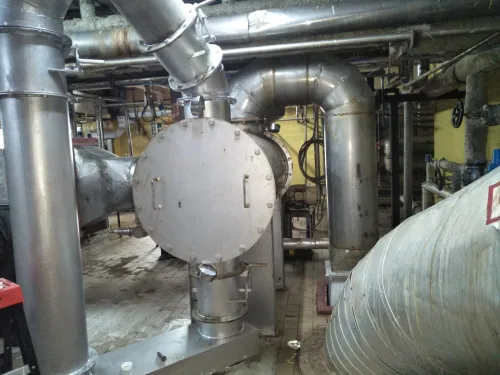
4. Send steam through insulated piping, a control valve and a separator or trap arrangement to steam coils, calandrias or steam-jacketed pans. Indirect heating keeps combustion gases out of the cane juice and lets operators regulate heating without exposing the product to direct flame.
5. Collect condensate after steam gives up its heat, then return it to the feedwater tank after removing air and checking contamination. Keep juice, cleaning chemicals and oily condensate out of this line; a contaminated return can damage the boiler or foul the product side.
A jaggery boiler system supports repeatable concentration, but it does not make jaggery directly. The plant still clarifies juice, controls residence time and finishes it by moulding, block formation or powdering.
How Steam Heats Juice Without Scorching It
Steam should heat jaggery juice indirectly, through a heating surface that separates the product from combustion gases and condensate. A boiler for jaggery processing supplies saturated steam to a pan jacket or internal coil, while a control valve regulates steam flow to match the evaporation load.
Prevent scorching by:
- Keep the heating surface covered with juice; an exposed coil develops hot spots.
- Maintain circulation with pan agitation or a properly designed recirculation path.
- Modulate steam pressure instead of operating the valve fully open.
- Drain condensate from the jacket or coil; trapped water causes uneven heating and hammering.
- Limit residence time after the target concentration is reached.
Direct steam injection is a different process. It adds water to the juice and can change solids concentration, mineral content and hygiene conditions, so use it only when the product specification permits food-contact steam.
Steam is not automatically the best heat source. Compare the options against the pan design and production pattern:
| Option | Best fit | Main limitation |
|---|---|---|
| Steam | Multiple pans, repeatable control and continuous evaporation | Needs a boiler, steam distribution and condensate management |
| Hot water | Low-temperature preheating and small, gentle duties | Transfers heat less intensely and needs a separate hot-water system |
| Direct firing | Small units with low capital cost and available bagasse | Smoke, uneven pan temperature and greater scorching risk |
| Thermic fluid | High-temperature, stable indirect heating | Higher system complexity and fluid-leak or degradation risks |
Choose steam when clean separation, tight control and several simultaneous heating duties justify the system. For one small open pan, direct firing can be simpler.
How to Size the Boiler for Juice Flow and Product Form
A 1,000 kg/h juice stream at 18% soluble solids contains 180 kg/h of solids. Concentrating it to 72% solids gives 250 kg/h of product, so the evaporator must remove 750 kg/h of water.
1. Measure juice flow and laboratory solids at the concentration-pan inlet. Calculate evaporation as:
Evaporation = feed flow × [1 − inlet solids ÷ outlet solids]
Use actual hourly flow, not the cane-crusher nameplate capacity.
2. Convert evaporation into steam demand using the evaporator’s steam economy:
Steam flow = water evaporated ÷ kg of water evaporated per kg of steam
A single-effect pan needs close to one kilogram of steam per kilogram of evaporation; multiple effects reduce steam consumption. Add the heat needed for juice warming, piping losses, start-up and the plant’s maximum simultaneous pan load before selecting the boiler’s rated steam output.
3. For liquid jaggery, size for the specified final solids, which reduces evaporation when the product leaves the pan wetter than block jaggery. Provide accurate steam control because overheating changes colour, viscosity and filling weight.
4. For solid blocks, use the 70–75% solids target as the main evaporation basis and check batch peaks during several pans operating together. Moulding does not require the same continuous steam load.
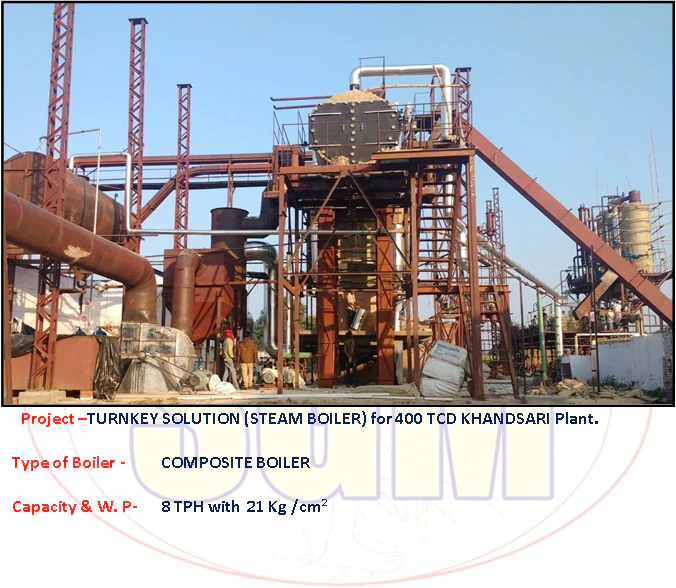
5. Powder jaggery needs the concentration duty plus any separately heated drying or conditioning equipment. Khandsari production needs additional allowance for crystallisation, massecuite heating and hot water; do not hide those loads inside the juice-evaporation estimate.
Select saturated steam pressure from the pan design and control-valve range, then return clean condensate to reduce boiler fuel and make-up water.
What to Check Before Selecting a Jaggery Plant Boiler in Pune
A boiler that passes a capacity calculation can still fail approval, waste fuel or damage tubes. For a jaggery plant boiler in Pune, check the complete installation before comparing quotations.
- Confirm the fuel’s moisture, ash and availability. Bagasse needs controlled furnace air, an induced-draft fan, ash handling, a cyclone or multicyclone, and any finer filtration or scrubber required by the Maharashtra Pollution Control Board consent.
- Obtain the proposed stack height, particulate-control layout, fuel type and boiler rating for MPCB consent and local zoning review. Confirm Maharashtra boiler registration, inspection and operating requirements before ordering.
- Specify a softener or other suitable treatment, chemical dosing, blowdown control and a water-testing schedule. Hardness scale cuts heat transfer, increases fuel use and can overheat tubes.
- Require pressure-relief protection, low-water and high-pressure trips, flame or combustion safeguards, gauges, alarms, safe access and trained operators.
- Separate condensate from juice and cleaning chemicals. A clean return line lowers feedwater energy and make-up-water demand; contaminated condensate belongs in drain or treatment, not the boiler.
Fuel choice changes the practical design:
| Fuel | Main check | Risk if overlooked |
|---|---|---|
| Bagasse | Furnace, draft and dust control | Smoke, ash carryover and consent failure |
| Biomass | Moisture, ash and storage | Unstable combustion |
| Oil or gas | Burner, fuel train and supply | Higher operating cost or supply interruptions |
Ask SGM Tech to show the steam-distribution, condensate-return, pan connections and emissions equipment on one layout, not as separate quotations.
Related product
 | JAGGERY MANUFACTURERS IN PUNE JAGGERY is a product derived from sugarcane juice by removing water content from it. View product → |
Frequently asked questions
Where does a boiler fit in a jaggery production line?
The boiler supplies steam after sugarcane juice extraction. Steam heats juice through coils, calandrias, or steam-jacketed pans before concentration and forming.
How does a jaggery plant boiler work?
Fuel combustion heats treated feedwater, producing steam. The steam transfers heat to the juice, then condensate returns to the feedwater system for reuse.
How does steam prevent jaggery juice from scorching?
Indirect steam heating keeps combustion gases away from the juice and provides controlled heat through a heat-transfer surface.
How do you size a boiler for a jaggery plant?
Base sizing on juice flow, starting temperature, target evaporation rate, operating pressure, heat losses, and whether production uses blocks, powder, or another product form.
What should you check before selecting a jaggery plant boiler in Pune?
Check available fuel, water quality, condensate recovery, pressure controls, safety devices, maintenance access, installation space, emissions requirements, and local service support.