A turnkey hot-water project covers far more than selecting a generator with a stated kcal/h rating. You will be able to define the battery limit, validate the heat load, compare heating technologies, check statutory interfaces and demand commissioning records that prove the installed system works.
Key takeaways
- Mark every included flange, cable termination and utility connection on the battery-limit drawing.
- Provide heat load, water flow, inlet temperature, fuel data and operating hours for sizing.
- Specify expansion control, relief valves, interlocks, flame safeguards and emergency shutdowns.
- Require commissioning records, operator training, drawings, manuals and test certificates at handover.
What work and equipment belong inside the turnkey battery limit?
The battery limit defines what the supplier designs, supplies, installs, tests and hands over. For an industrial hot water generator scope, request a drawing that marks every included connection, flange and cable termination before fabrication.
- Survey the site: verify access, foundation loads, ventilation, drainage, fuel route, chimney or flue route, electrical supply and installation space.
- Freeze the design basis: generator body, furnace or combustion chamber, burner or solid-fuel feeder, fuel-storage and handling equipment, circulation pumps, expansion vessel, heat exchangers, valves, strainers, insulated headers, instruments, control panel, safety devices, water-treatment equipment and structural supports.
- Complete fabrication, inspection and delivery, then erect the equipment, connect fuel and water circuits, install piping and insulation, terminate electrical and instrument cabling, and complete the chimney or flue route.
- Test the installation: flush lines, clean strainers, pressure-test piping, check pump rotation, charge the expansion vessel, calibrate instruments and verify safety interlocks.
- Commission cold and hot circulation, burner or feeder operation, high-temperature and low-flow trips, emergency stop, and fuel-system performance. Train operators and submit as-built drawings, manuals, test records, calibration certificates, maintenance schedules and punch-list closure.
A hot water generator turnkey project in Pune must state whether civil foundations, fuel storage, incoming power, gas-train connections, plant-wide distribution piping, drainage and long process branches are included. The battery-limit drawing prevents a generator from reaching temperature while remote users remain unserved because primary headers were mistaken for complete plant distribution.
What information is needed to size the generator and connected system?
A design basis matters more than a nominal heater capacity: it determines the generator, pump, expansion vessel, burner and piping sizes. For a hot water generator turnkey solution, validate useful duty with Q = mass flow × specific heat × (supply temperature − return temperature).
Keep units consistent, then add distribution and standby losses before selecting capacity in kW or kcal/h.
Provide these inputs before fabrication:
- Useful heat duty, hot-water supply and return temperatures, design flow, allowable temperature variation, operating hours, batch or continuous demand, process connection sizes and operating pressure.
- Water chemistry, makeup-water quality, fuel type, fuel moisture and ash content, required turndown range, ambient conditions and available utilities.
- Site data for a hot water heating system installation in Pune: voltage and fault level, fuel pressure and composition, access route, foundation loads, ventilation, drainage, chimney height and terminal location.
| Load type | Sizing inputs | What changes |
|---|---|---|
| Process hot-water load | Equipment duty, flow, supply-return temperatures and batch profile | Peak demand can occur during charging, washing or product heating |
| Domestic hot-water demand | Incoming-water temperature, user draw-off pattern, storage volume and hygiene temperature | Storage and draw-off peaks can govern size rather than process duty |
Do not size domestic service from a process duty alone. Verify measured flow and temperatures during acceptance; the result must show useful heat delivered, losses, fuel use and operating duration. For heat recovery, also record exhaust-gas temperature, allowable back-pressure and fouling condition.
How should the hot-water circuit, fuel system and safety controls be configured?
In an industrial hot water generator scope, choose a closed loop for recirculating process heat: it limits oxygen entry and water loss. Use an open loop only when heated water is intentionally discharged or consumed, because continuous makeup increases scaling and corrosion.
| Arrangement | Design consequence | Use |
|---|---|---|
| Open loop | Fresh water enters and heated water leaves | Consumption or once-through duties |
| Closed loop | Recirculation requires expansion control | Process heating circuits |
In a closed loop, connect the expansion vessel to the suction side of the circulation pump, with its volume based on system water content and temperature range. Show minimum static pressure, vessel pre-charge, fill and makeup connection, automatic air separator at the hot high point, and a piped relief-valve discharge to a safe visible drain.
Never install an isolating valve between the generator and its relief protection.
Specify interlocks for boiling, overpressure, dry running, low flow, pump dead-heading, pump failure, high temperature and sensor failure. Include a bypass or minimum-flow route where the pump can run against closed valves.
Fuel scope changes the package:
- Gas: sized gas train, regulator, filter, automatic shut-off valves, leak-tightness test, combustion-air ventilation and burner-management logic.
- Oil: tank, transfer pump, filtration, bunding and fire protection.
- Biomass: feeder, grate or refractory maintenance, ash removal and dust control.
A hot water generator turnkey solution must treat hard or saline makeup water with softening, filtration, chemical dosing, sampling and blowdown connections. Test hardness and chlorides; untreated scale reduces heat transfer and can overheat tubes locally.
When is a direct-fired generator the right choice for a Pune factory?
A direct-fired hot-water generator is the right choice when you need reliable process heat at moderate temperatures, have an economical fuel supply, and want faster response than a heat pump or waste-heat system. It is not automatically the best substitute for every heating duty.
| Option | Best fit | Main trade-off |
|---|---|---|
| Direct-fired generator | Pressurised hot water, rapid startup, gas, oil or biomass available | Fuel handling, emissions equipment and combustion maintenance |
| Steam boiler | High-temperature heat, steam distribution or multiple users | Higher pressure, condensate recovery, water treatment and boiler operation |
| Thermic-fluid heater | High temperatures without circulating water pressure | Fluid degradation, leak control and specialist maintenance |
| Electric heater | Clean point-of-use heat, limited duty or no combustion allowed | High electrical demand and dependence on transformer capacity |
| Heat pump or waste-heat system | Low-temperature duty or a steady recoverable heat source | Slower response, source-temperature limits and reduced output during interruptions |
For a fuel-fired proposal, check Pune fuel availability, storage space, gas pressure or oil-transfer capacity, biomass moisture and ash handling, startup time, turndown, standby redundancy, operator workload and the electricity consumed by pumps, fans and controls.
Gas needs a gas train and leak testing; oil needs bunded storage and fire protection; solid fuel needs feeders, ash removal, dust control and more attendance.
Specify design pressure and temperature, ASME BPVC Section IV or another code of construction, materials, weld records and the relief-device sizing basis. During a hot water heating system installation in Pune, verify the project-specific requirements for MPCB consent, stack and emissions controls, petroleum storage, factory and fire-safety permissions, electrical approvals, and boiler or pressure-equipment rules.
A hot water generator turnkey project in Pune has no universal approval list.
What happens during installation, commissioning and handover?
A hot water heating system installation in Pune starts with mechanical completion, not burner start-up. Verify the foundation, anchor points, equipment access, lifting route, ventilation, drainage, chimney route and available shutdown window before placing the generator.
1. Place and align the generator, pumps, expansion vessel and supports. Install process piping, insulated headers, valves, relief discharge, strainers and drains. Complete the chimney or flue, water-treatment connections, electrical cabling and instrument terminations.
2. Flush the circuit, remove construction debris and clean every strainer. Perform pressure or hydrostatic testing to the stated design code, check pump rotation, charge the expansion vessel to the specified pressure, calibrate sensors and verify control-loop responses.
3. Run cold circulation before firing, then confirm hot circulation and stable flow. Hot water generator commissioning must test burner light-off, flame failure, high-temperature cut-out, low-flow or pump-failure trip, low-water or low-pressure protection and emergency-stop operation. A successful ignition proves little if an interlock remains untested.
4. Base acceptance on useful heat delivered to the water. Record measured water flow, inlet and outlet temperatures, pressure, fuel use, electrical consumption, ambient conditions, test duration, calculation method and instrument accuracy. For heat recovery, also record exhaust temperature, allowable back-pressure and fouling condition.
5. Close handover with as-built P&IDs, electrical and instrument drawings, calibration certificates, pressure-test records, combustion or emissions results, cause-and-effect logic, manuals, spares, water-chemistry limits, maintenance schedules, training records and punch-list closure. SGM Tech adds value when its contract assigns these interfaces and records, rather than only supplying the generator.
Related product
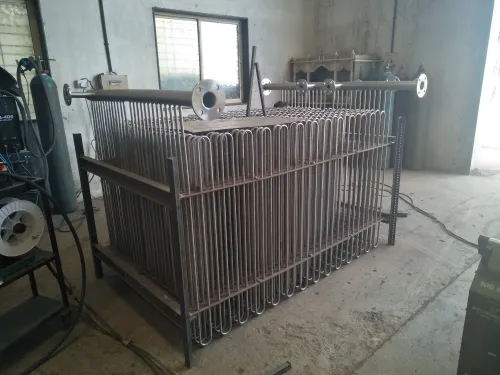
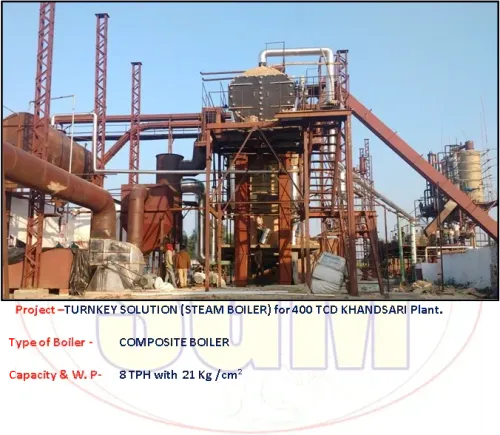
 | TURNKEY SOLUTION A HOT WATER GENERATOR is a type of heater in which heat is generated by burning fuel and is transferred to the water at ambient temperature which is... View product → |
Frequently asked questions
What belongs inside a hot water generator turnkey battery limit?
The battery limit should identify the generator, burner, pump and piping, fuel train, controls, electrical connections, insulation, supports, installation, testing and every included utility connection. Request a marked drawing showing each flange and cable termination.
What information is needed to size a hot water generator?
Provide the required heat load, water flow rate, inlet and outlet temperatures, operating hours, process pressure, water quality, fuel type and fuel pressure. Include startup demand and future capacity if the system will expand.
How should a hot-water circuit and fuel system be configured?
Specify circulation pumps, isolation valves, strainers, expansion control, pressure and temperature relief, drains, vents and instrumentation. The fuel train needs isolation, filtration, pressure regulation, flame supervision, automatic shutoff valves and emergency shutdown interlocks.
When is a direct-fired hot water generator suitable for a Pune factory?
Choose direct firing when you need a dedicated hot-water supply, the site has suitable fuel and combustion exhaust can be safely routed. Compare it with heat recovery or steam-to-water heating when waste heat or an existing steam system is available.
What happens during hot water generator commissioning and handover?
The team checks installation, pressure-tests the circuit, verifies fuel and electrical connections, tests burner sequencing and safety trips, records operating temperatures and pressures, and hands over drawings, manuals, certificates, test reports and operator training.