A jaggery or khandsari plant produces two fundamentally different dust streams: hot furnace flue gas and cooler particulate released during fuel, ash, bagasse and product handling. By the end, you will be able to trace each stream from pickup hood to discharge, compare collector types, and identify the operating data required before selecting equipment.
Key takeaways
- Separate dry handling dust from hot furnace flue gas at the source.
- Use dedicated hoods, ducts and collectors for unlike dust streams.
- Control moisture before filtration to prevent sticky deposits and blinding.
- Check airflow, spark protection, access doors and discharge equipment before commissioning.
Where dust originates and why one collector cannot serve every point
Jaggery and khandsari plants generate two unlike dust streams: dry solids from handling and hot particulate carried in furnace flue gas. Understanding how dust collectors work in jaggery plants in Pune starts with separating these sources, not connecting every hood to one oversized fan.
Dust-producing points include:
- Furnace and fuel-feeding points: bagasse, coal, ash and char become airborne around charging doors and conveyors.
- Ash-removal areas: hot ash falls, breaks apart and escapes during raking, screening or discharge.
- Juice boiling sections: dried syrup, entrained ash and fine bagasse collect around boiling pans and exhaust openings.
- Bagasse handling: shredding, conveyors, storage piles and transfer chutes release dry fibrous dust.
- Product packing: dry jaggery or sugar fines escape at screens, filling machines and bag-sealing stations.
| Stream | What it contains | Why the collector differs |
|---|---|---|
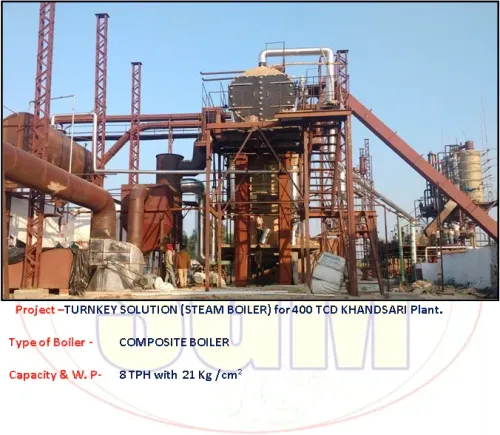
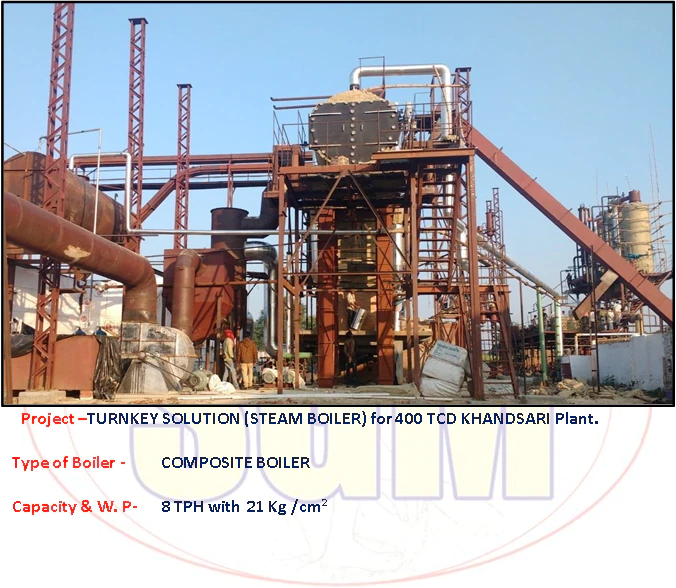
| Combustion flue gas | Hot gas carrying ash, char and fine combustion particles; it also contains moisture and condensable material | Select for gas temperature, moisture, dew point and ash loading. A cyclone, multicyclone, scrubber or protected fabric filter may suit the furnace exhaust. |
| Dry material-handling dust | Cooler bagasse, coal, ash, sugar and jaggery particles released at hoods, chutes and packing points | Use enclosed transfers, skirts and local exhaust connected to a dry collector. Wet or sticky flue-gas equipment can blind on this service, while one central fan cannot fix poor hood capture. |
A furnace stack and a packing-room pickup therefore need separate airflow, ducting and filtration decisions.
The air path from pickup hood to cleaned-gas outlet
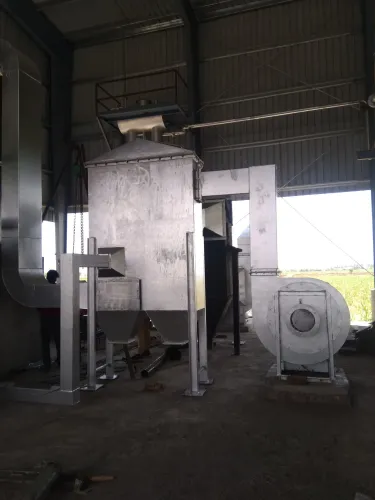
The industrial dust collector working sequence is a controlled air path: a hood captures contaminated air, ductwork carries it under negative pressure, a separator removes particles, and a fan drives cleaned gas to the outlet.
1. The pickup hood encloses or draws across the dusty point. Its shape and capture velocity determine whether dust enters the system or escapes into the work area.
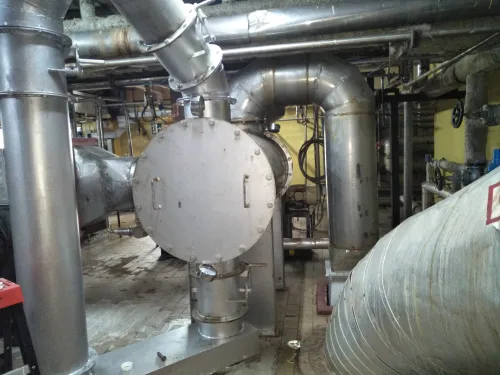
2. Duct branches carry the contaminated air to the collector. Correct diameter and airflow prevent settling, while sealed joints stop false air from weakening suction.
3. The cyclone, multicyclone, baghouse or cartridge body separates particulate from the gas. A cyclone throws heavier particles to the wall; a fabric filter retains finer dust on its dust cake.
4. The hopper receives separated material below the collector. A rotary airlock, screw conveyor or sealed slide gate removes it without allowing outside air to enter.
5. The induced-draft fan, normally downstream of the separator, creates the pressure difference that pulls air through hoods, ducts and filter media. Its duty must cover system resistance at the required operating flow.
6. The cleaned-gas outlet sends air to a stack or returns it indoors when the process and local approval permit. Measure emissions at this point, not at the hood.
A jaggery plant dust collector can show clean outlet gas while dust remains near a leaking chute or poorly positioned hood. Check capture at each source separately; a large central fan cannot correct an open enclosure, undersized branch or unbalanced duct system.
How cyclones, multicyclones and filters separate particles
Centrifugal separation starts with tangential gas entry into a cyclone. The resulting vortex throws larger, heavier particles toward the wall through centrifugal force and particle inertia; they slide into the hopper while a smaller clean-gas vortex exits through the central outlet.
A multicyclone bank uses several smaller cyclone tubes in parallel, improving fine-ash separation and handling higher gas flow than one large body.
| Option | Separation principle | Choose it when |
|---|---|---|
| Cyclone | Single vortex removes coarse particles by centrifugal force | Use as a rugged precleaner for hot furnace gas, bagasse ash or heavy dust; fine-particle removal is limited. |
| Multicyclone bank | Parallel small cyclones create stronger centrifugal action | Use for higher furnace-gas flow and better ash removal before a final filter or scrubber. |
| Baghouse | A dust cake on fabric captures fine particles; pulse-jet air cleans each bag | Choose for high-efficiency dry fine-particle control after controlling temperature, moisture and condensables. |
| Cartridge collector | Pleated media provides large filtering area in a compact housing | Choose for dry, relatively cool transfer-point dust where space is limited and dust loading is manageable. |
| Wet scrubber | Liquid droplets capture particles and cool or condition gas | Choose for hot, wet or sticky exhaust, or when particulate and soluble gases need joint treatment; provide slurry handling and wastewater controls. |
For a khandsari dust collection system, use a cartridge collector or baghouse on dry enclosed handling points only after checking combustibility, humidity and airflow. Route furnace gas to a cyclone, multicyclone, baghouse or scrubber according to temperature, ash loading and required outlet performance—not simply to the nearest collector.
Moisture, embers and sugar dust: the operating risks
A monsoon-wet khandsari dust collection system can lose capacity without any change in fan speed. Humid air condenses on cool ducts, hoppers and filter cages when metal falls below the gas dew point; sugar and ash then form a hard, sticky coating that blinds bags, raises pressure drop and blocks rotary airlocks.
- Keep furnace-exhaust ducts and filter housings insulated, control gas temperature above the condensation risk, and provide drainage. A jaggery plant dust collector exposed to wet, condensable flue gas can fail even when its filtration area is correctly sized.
- Treat sugar, bagasse and ash dust as combustible material. Leaking transfer points, open chutes and poorly positioned pickup hoods leave deposits on beams and inside ducts; an ignition source can turn a small accumulation into a flash fire.
- Stop embers before they reach fabric filters. A settling chamber, cyclone or spark arrester reduces ember carryover, while high-temperature detection, accessible inspection doors and a defined fire-response procedure address what separation equipment cannot guarantee.
- Remove deposits before they harden. Check hopper level, discharge seals and pressure drop; a blocked hopper can push dust back into the filter or create an unsafe manual-cleaning job.
Keep dry material-handling dust separate from hot furnace gas unless the collector is designed for both streams. A large fan cannot overcome a leaking branch, excessive hood opening or undersized duct, and extra airflow can carry sparks deeper into the system.
The specification and installation checks that determine performance
Specify a jaggery plant dust collector by operating conditions, not by fan capacity alone. Require measured gas flow at operating temperature, inlet dust concentration, maximum temperature, moisture level or dew point, filtration area, collector velocity, allowable pressure drop, cleaning method, hopper discharge arrangement and guaranteed outlet particulate concentration.
1. Record each pickup point separately: furnace exhaust, fuel feeding, ash removal, bagasse transfer and packing. Do not combine hot, moist flue gas with dry handling dust without a documented engineering basis.
2. Check the layout before fabrication. Keep ducts short, avoid sharp bends, provide straight runs or turning vanes before the filter, and size the stack for the specified flow. Allow bag access, hopper inspection, rotary-airlock removal, safe ash handling, weather protection and monsoon drainage.
3. Obtain the compliance file: Maharashtra Pollution Control Board Consent to Establish or Consent to Operate, the approved process and fuel rates, stack dimensions, sampling-port and platform details, emission-monitoring method, dust-disposal arrangement and the operating conditions used to demonstrate compliance.
4. Commission against recorded values, not a visual inspection. Log differential pressure, fan amperage, gas temperature, hopper discharge and stack opacity or particulate concentration. Rising pressure suggests loading, wet dust or blinding; unusually low pressure suggests broken bags, bypass leakage or an open door.
For dust collector installation in Pune, include insulation and condensation control because monsoon humidity can blind bags. SGM Tech can be evaluated on whether its design package links these process, layout and commissioning figures rather than presenting an equipment-only quotation.
Related product
 | MULTIPLE CYCLONE DUST COLLECTOR A MECHANICAL DUST COLLECTOR is a system used to enhance the quality of air released from industrial and commercial processes by collecting dust and... View product → |
Frequently asked questions
Why should jaggery plants use separate dust collection systems?
Dry dust from sugar handling and hot particulate from furnace flue gas have different temperatures, moisture levels, particle sizes and fire risks. One collector and duct network cannot efficiently handle both without careful separation and controls.
How does air move through a jaggery plant dust collector?
A pickup hood captures contaminated air, ductwork carries it to a cyclone, multicyclone or filter, the collector removes particles, and a fan sends cleaned gas to the outlet or stack. Airflow depends on hood design, duct velocity, pressure loss and fan capacity.
What is the difference between cyclones and filters for jaggery dust?
Cyclones use centrifugal force to remove heavier particles and protect downstream equipment. Fabric or cartridge filters capture finer dust but require suitable temperature, moisture control, cleaning cycles and safe dust discharge.
What installation checks affect dust collector performance?
Verify hood capture, duct sizing, access for cleaning, airtight joints, fan rotation, pressure readings, filter compatibility, rotary valve operation, spark protection and the final discharge arrangement before commissioning.